

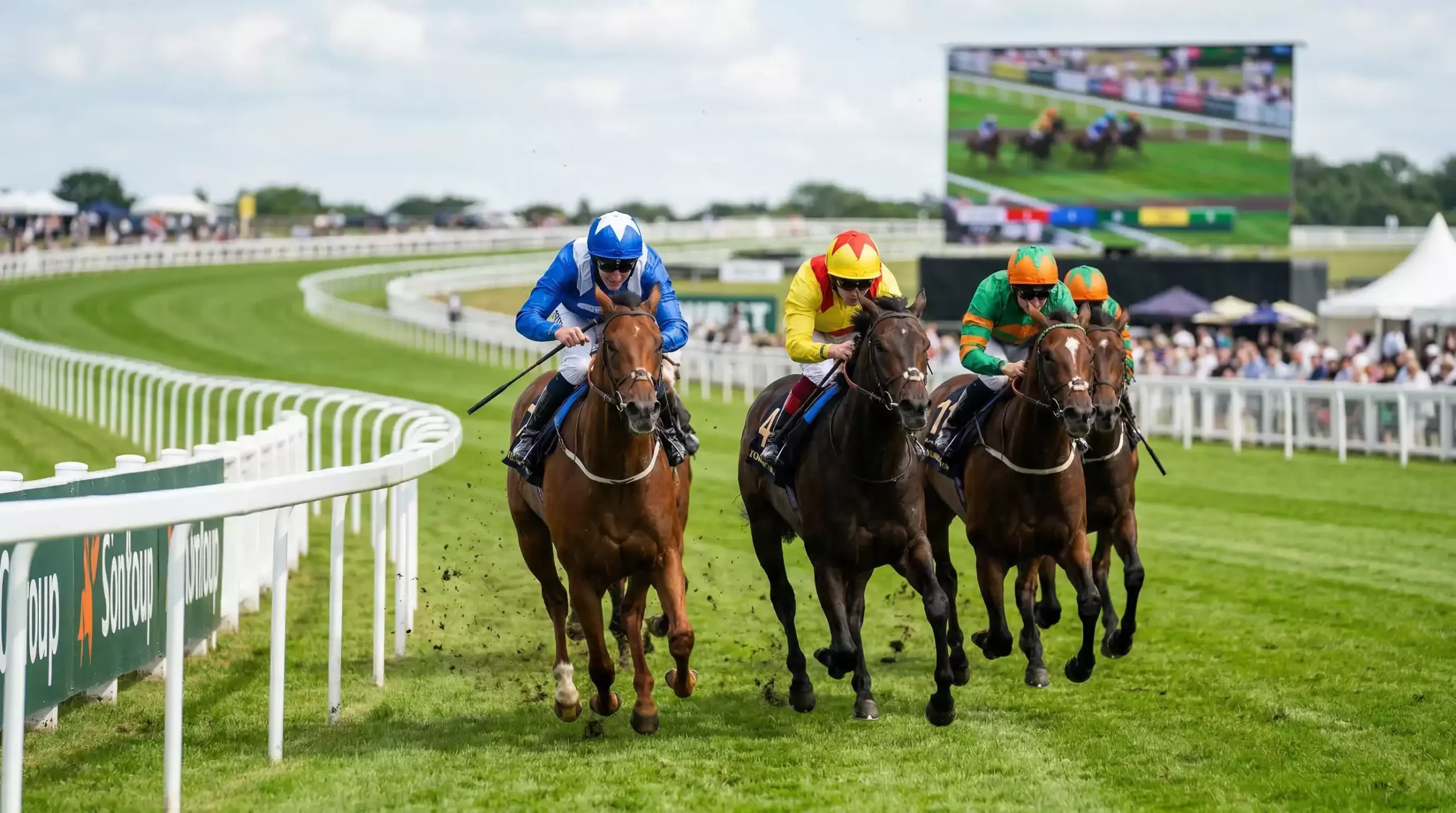
In-play horse racing betting is the fastest and most volatile form of wagering on the sport. Unlike pre-race betting, where you have hours or days to study form and compare prices, in-play markets move in seconds. A horse that is travelling well three furlongs from home might be 2/1 in-running; two strides later, after being headed by a rival, it could be 6/1. The speed of price movement makes in-play racing both exciting and unforgiving — and it demands a different set of skills from anything you do before the race starts. In-Play Horse Racing Betting — More on this topic at horse racing bookmakers.
The context is relevant. Average betting turnover per race has fallen 8% year on year according to the HBLB’s latest figures, part of a longer decline in pre-race betting. In-play betting, meanwhile, continues to attract interest — particularly among punters who combine live streaming with real-time wagering. The shift does not offset the overall turnover decline, but it reflects a change in how some punters engage with the product. Races last minutes — in-play decisions last seconds.
How In-Play Racing Markets Work
In-play betting on horse racing operates differently from in-play betting on most other sports. Football matches last 90 minutes and in-play markets are active throughout. Horse races last between one and eight minutes, and the window for in-play betting is correspondingly compressed. The entire in-running market — from the moment the stalls open or the tape goes up to the moment the first horse crosses the line — is a sprint in both senses.
Most traditional bookmakers suspend their horse racing markets once the race begins. You can place bets before the off, and you can use cash out during the race, but new bets on the outcome are not available in-running at most fixed-odds operators. The primary reason is the delay between real-time action and the bookmaker’s ability to update odds accurately. The two-to-five-second stream delay, combined with the rapid pace of a horse race, makes it impractical for bookmakers to offer fixed-odds in-play markets without exposing themselves to significant risk from punters who are ahead of the feed.
The exception is the betting exchange. The leading exchange platform remains open in-running on horse racing and is the dominant venue for in-play racing. The exchange model works because the odds are set by other punters, not by the operator — if you want to back a horse at 3/1 in-running, someone else has to be willing to lay it at that price. The market is peer-to-peer, and the exchange profits from commission regardless of who wins. This structure allows in-running markets to function even with rapid price movement, because the risk sits with the individual punters rather than the platform.
The in-running market on the exchange for a typical UK race with decent liquidity will show prices updating several times per second during the race. The back and lay prices narrow and widen based on how the race is unfolding — the leader’s price shortens, the backmarkers drift, and any change in the race dynamics (a horse being short of room, a challenge developing, a leader weakening) is reflected in the odds almost instantaneously. Trading in this environment requires not just racing knowledge but reaction speed and comfort with rapid financial decisions.
Exchange vs Bookmaker In-Play
The distinction between exchange and bookmaker in-play is fundamental to how you approach live betting on racing.
On the exchange, you can both back and lay in-running. This means you can open a new position during the race (backing a horse you believe is about to win) or close an existing one (laying a horse you backed pre-race to lock in profit or cut losses). The flexibility is unmatched. A punter who backed a horse at 10/1 before the race and sees it trading at 3/1 in-running can lay it at 3/1 for a guaranteed profit regardless of the outcome. That kind of trading is impossible with a traditional bookmaker.
The largest UK betting groups reported 13.9 million average monthly users globally in 2024. A significant portion of exchange activity in racing occurs in-running, making the exchange the single most important platform for in-play horse racing in the UK. The liquidity on major races — Saturday features, festival events, big handicaps — is deep enough to support meaningful in-running positions. On smaller races at lower-tier tracks, liquidity thins rapidly in-running, and getting matched at a desired price becomes harder.
Bookmaker in-play is limited to cash out. You cannot place a new bet on a horse once the race has started at most fixed-odds operators. What you can do is cash out an existing bet at a price that reflects the in-running state of the race. The cash out offer updates in real time (with a delay that mirrors the stream) and lets you lock in profit or limit loss. It is a one-directional tool — you can close a position but not open one — and the margin embedded in the cash out price means you pay for the convenience.
In-Play Strategy
In-play horse racing strategy divides into two broad approaches: reactive trading and position management.
Reactive trading means entering the market during the race based on what you see. A horse that is travelling strongly but has drifted in the betting because of an unfavourable early position might represent value if you believe it will make progress in the closing stages. Backing that horse in-running at a bigger price than it would have been pre-race — and laying it when the market corrects as the horse improves its position — is a classic exchange trade. It requires fast assessment, a reliable stream (or better, an audio commentary with less delay), and the discipline to accept that you will sometimes be wrong.
Position management means using in-play to adjust bets placed before the race. If you backed a horse at 8/1 and it is racing prominently at the two-furlong pole, the in-running price might have shortened to 2/1. You can lay at 2/1 to guarantee a profit regardless of the outcome, or lay partially to reduce your exposure while keeping some upside. This is the most common use of in-play for experienced racing punters — not entering new trades, but managing the risk on pre-race positions as new information (the race itself) unfolds.
The critical skill in both approaches is managing the delay. If you are watching the race on a bookmaker stream with a three-to-five-second lag, the exchange prices you see have already moved past the action you are watching. Punters who rely on data feeds or audio commentary with less delay have an informational edge over those watching standard streams. For most recreational punters, this latency makes aggressive in-running trading unprofitable. Position management — using in-play to hedge or protect pre-race bets — is a more realistic and lower-risk application of in-play markets.
The Right Setup for In-Play Racing
The exchange is the only platform that offers genuine in-play betting on horse racing in the UK. If you want to back or lay during a race, the exchange is where it happens. The app handles in-running trading adequately, though the desktop interface is generally faster for time-sensitive decisions. Liquidity is strong on feature races and thinner on everyday fixtures.
For cash out during a race, the leading fixed-odds operators refresh quickly, offer the feature on the widest range of racing markets, and integrate it with the live stream so you can watch and act on the same screen. Several major operators offer in-play cash out on racing with acceptable speed, though few match the responsiveness of the market leader. See also Horse Racing Loyalty Programmes.
The practical setup for a punter interested in in-play racing is straightforward: an exchange account for genuine in-running trading, and a leading fixed-odds account for pre-race bets with in-play cash out. Running both gives you the flexibility to manage positions however the race develops, whether that means trading on the exchange or simply cashing out at the right moment with your bookmaker.
