

Overround, BOG and Safety — What This Guide Actually Measures
- Bookmakers evaluated by measured overround (110–130% typical, up to 180% on Grand National ante-post) rather than by affiliate commission or subjective scores.
- Best Odds Guaranteed terms dissected in full — caps, timing rules, and race-type exclusions that most comparison sites quietly ignore.
- Live streaming decoded: “free” means funded account, and coverage depends on SIS/RMG licensing deals, not headline claims.
- Safety data that matters: 522% growth in unlicensed site traffic since 2021, 2.7% problem gambling prevalence, and why a UKGC licence is the non-negotiable baseline.
- Actionable selection criteria — tight odds, festival betting, mobile UX, ongoing loyalty — backed by industry revenue data and verified terms for the spring 2026 season.
Methodology: How We Rank Bookmakers
Ranking horse racing bookmakers by gut feeling is how affiliate sites have operated for years. It produces lists that look authoritative but crumble the moment you ask a simple question: how much margin is this bookmaker actually charging me? Our approach starts with measurable criteria and builds outward from there.
Overround: The Metric That Matters Most
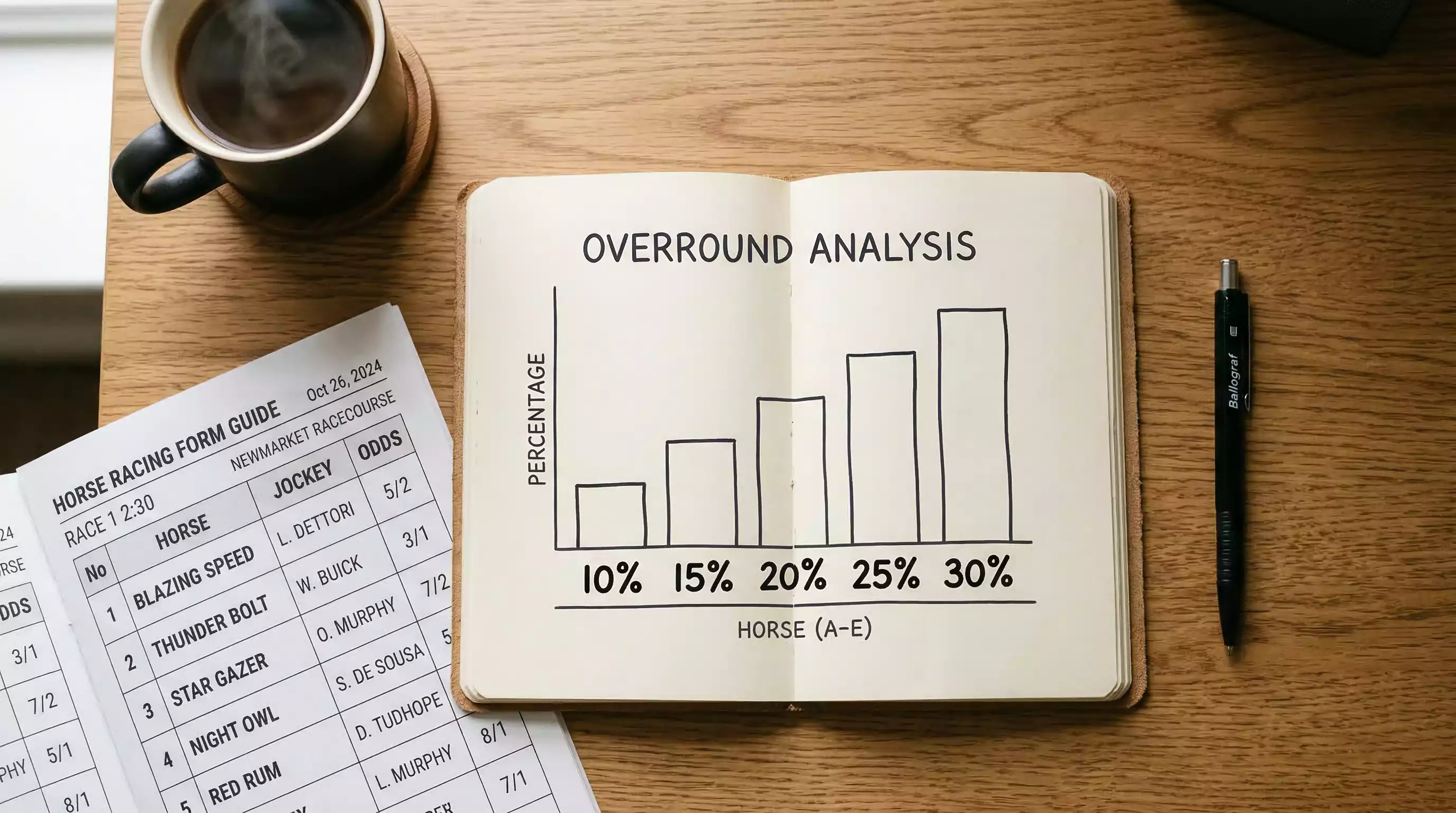
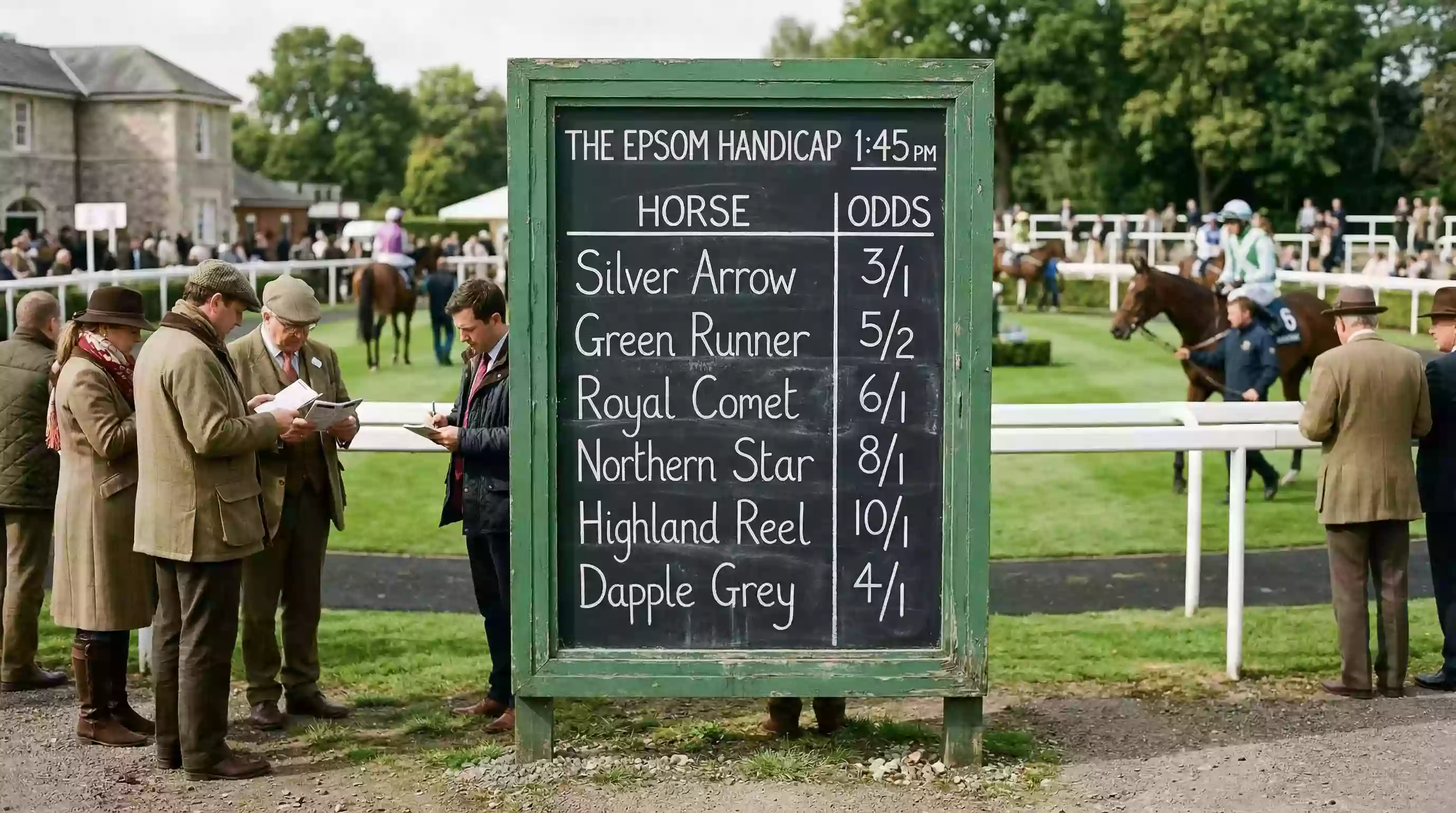
The overround is the percentage by which the sum of implied probabilities on a given race exceeds 100%. A perfectly fair book returns exactly 100%; everything above that is the bookmaker’s built-in edge. Typical UK horse racing overrounds sit between 110% and 130%, depending on race type and field size. On ante-post markets for high-profile events like the Grand National, that figure can spike to 180% — nearly double the true probabilities. Every percentage point above 100% is money moving from your pocket to the operator. When we rank, overround carries the heaviest weight.
Overround & Value Calculator
Enter every runner's price; see the book's margin and each horse's fair odds.
The overround is the bookmaker's built-in edge — the amount the implied probabilities across a race add up to above 100%. It's the single biggest long-term cost you pay, and it hides across the whole field, not in any one price. Paste in a full field to measure it.
BOG, Streaming, Payout Speed, Mobile UX
Beyond overround, we evaluate Best Odds Guaranteed terms — not just whether a bookmaker offers BOG, but what caps apply, which races qualify, and whether the guarantee extends to early prices or only to bets placed after a specified morning window. Live streaming coverage is assessed by the number of UK and Irish meetings available, funding requirements, and whether the feed comes through SIS or RMG licensing. Payout speed is tested on standard e-wallet withdrawals. Mobile UX is scored on navigation fluency — how many taps from app launch to a placed bet on the next race.
Scale of the Market
To understand why these metrics matter, consider what is at stake. The total gross gambling yield across the UK remote betting and casino sector reached £7.8 billion in the financial year ending March 2025, with horse racing’s £766.7 million representing roughly a tenth of that total. The wider racing industry contributes an estimated £4.1 billion to the UK economy annually through direct and indirect effects, supporting approximately 85,000 jobs across 59 licensed racecourses and their supply chains.
The Horserace Betting Levy Board collected a record £108.9 million in levy yield during 2024/25 — the highest since the 2017 reform that extended the levy to offshore operators. That money flows directly into prize funds (which reached a record £194.7 million in 2025, up 3.5%), integrity services, and veterinary research. For 2026, the HBLB has increased its prize-money contribution by a further £4.4 million within a support budget of £77.1 million. Yet this growth in levy yield masks a troubling underlying trend: average betting turnover per race fell 8% year-on-year in 2024/25 and is down 19% compared to 2021/22, with total betting turnover on racing declining 6.8% in 2024 and a further 4.2% in the first nine months of 2025 — a decline widely attributed to the impact of affordability checks on higher-staking customers. The relationship between betting revenue and the sport’s financial health is not abstract. BHA CEO Brant Dunshea made this dependency plain when British racing took the unprecedented step of cancelling fixtures in protest at proposed tax changes: “We haven’t taken this decision lightly, but in doing so, we are urging the Government to rethink this tax proposal to protect the future of our sport” — Brant Dunshea, CEO, British Horseracing Authority. When you place a bet with a licensed UK bookmaker, a portion of the margin you pay sustains the sport you are betting on.
Selection Criteria Deep Dives
Rather than ranking operators by name, this guide breaks down the criteria that matter most. Your ideal bookmaker depends on which of these factors you weigh heaviest. Below, each criterion is examined in depth so you can apply it to any operator on the UKGC register.
Margin and Overround — The Cost You Pay on Every Bet
The overround is where your money goes. Typical UK horse racing overrounds sit between 110% and 130%, depending on race type and field size. The tightest fixed-odds operators in the market typically run overrounds in the 112–118% range on standard UK Flat meetings, while the widest can push above 125% on the same card. That difference of five to ten percentage points may sound small on a single bet, but it compounds dramatically across a season of regular wagering.
On National Hunt cards, particularly high-profile Saturday fixtures, margins tend to tighten as operators compete for volume. Conversely, low-profile mid-week meetings at smaller tracks often carry wider books because there is less competitive pressure to sharpen prices. Ante-post markets for flagship events like the Grand National can spike to 180% — nearly double the true probabilities — because large fields and long time horizons give operators room to build in a wider cushion.
When assessing any bookmaker, compare the overround across a full field rather than cherry-picking individual prices. A single standout price on the favourite means little if the rest of the card is priced at 125%. The most reliable measure of value is the average overround across a representative sample of meetings — UK Flat, National Hunt, and all-weather — over a period of weeks. Operators with high revenue and deep market coverage tend to offer tighter margins because they can afford to compete on price, but this is not a universal rule. Always verify with current data.
If your primary concern is getting the closest price to true probability on a daily basis, prioritise operators with consistently low overrounds across the broadest range of fixtures. Margin is the single most important long-term cost.
Exchange vs Fixed Odds — Two Different Cost Models
Betting exchanges operate on a fundamentally different pricing model. Instead of accepting the bookmaker’s embedded margin, you trade directly with other punters. Typical exchange overrounds hover around 102–105% — a world apart from the 110–130% range of fixed-odds books. The catch is that you pay commission on net winnings, usually starting at around 5% and reducible through loyalty tiers or volume discounts.
The net cost per bet on an exchange is still lower than the embedded margin at most fixed-odds operators, provided there is sufficient liquidity on your selection. On UK and Irish racing, exchange liquidity is generally reliable for feature races, competitive handicaps, and any meeting that attracts significant media coverage. It can thin out on smaller all-weather fixtures, low-grade cards, and international meetings where the pool of active exchange users is smaller.
The most powerful approach is to maintain accounts with both a fixed-odds bookmaker and an exchange. Use the exchange when liquidity is deep and the overround advantage is clear — typically on feature races and festival cards. Fall back to fixed odds for smaller meetings where exchange liquidity is thin, or when you want access to Best Odds Guaranteed protection that exchanges do not offer. The combination of the two models, applied strategically, gives you the lowest possible cost per bet across the full racing calendar.
An exchange account paired with a tight fixed-odds operator gives the sharpest setup available. Use the exchange for feature races with deep liquidity; use fixed odds with BOG for everything else.
Festival Betting — Heritage, Volume, and Value
The UK racing calendar is built around a handful of flagship festivals — the Cheltenham Festival, the Grand National at Aintree, Royal Ascot, the Ebor Festival at York, and Glorious Goodwood. These events generate extraordinary betting volumes. Cheltenham 2026 is expected to generate around £450 million in wagering across four days, making it the most heavily bet-on racing festival of the year. All 28 races at the 2025 Cheltenham Festival featured in the top 31 individual races by betting turnover for the entire year, with only the Grand National, the Derby, and the Scottish National joining them.
The 2025 Grand National generated over £250 million in total wagering across the Aintree Festival, with roughly half of all bets placed at £5 or less by casual punters. The Grand National attracts 700% more bets than the Cheltenham Gold Cup, a reflection of its extraordinary reach beyond the regular racing audience — around 30% of those betting on the race are making their first deposit or first wager in a year.
For festival-focused punters, the criteria to prioritise are: competitive ante-post pricing (check overrounds on early markets weeks before the event), BOG from morning price onwards, and event-specific promotions such as enhanced odds, extra places, and money-back specials. Operators with a long heritage in racing tend to invest most heavily in festival coverage, publishing dedicated racecards, previews, and exclusive offers. Compare promotional terms carefully — some look generous at headline level but carry wagering requirements or minimum odds conditions that reduce their real value.
If your year revolves around the big festivals, look for operators with deep ante-post markets, strong BOG terms during festival weeks, and a demonstrable history of investing in peak-calendar racing.
Promotions and Loyalty — Ongoing Value vs Welcome Bonuses
Welcome bonuses grab headlines, but their real worth depends on wagering requirements, minimum odds conditions, and whether the stake is returned. A “Bet £10 Get £30” offer looks attractive until you discover the free bets carry 5x wagering requirements at minimum odds of 1/2 — at which point the expected value drops considerably. The distinctions between genuine promotional value and marketing theatre are found in the fine print.
For punters who bet regularly rather than in festival-only bursts, ongoing loyalty programmes matter more than a one-time sign-up deal. The most developed retention schemes in UK racing offer regular reload offers on selected meetings, racing clubs with exclusive perks, and frequent money-back specials that provide a steady drip of value through the week. Large operators backed by major corporate groups tend to run the most structured loyalty programmes because they have the data infrastructure and customer volume to sustain them.
Operators that also maintain a high-street retail presence can add an omnichannel dimension — the ability to use a single account across online and in-shop betting. For some punters, this is irrelevant; for those who enjoy the social element of on-course or shop betting alongside their online activity, it provides genuine convenience.
The practical advice is to evaluate promotional value over a full season, not on day one. A bookmaker with a modest welcome bonus but consistent weekly offers, competitive BOG, and a loyalty programme may deliver more total value across the year than one with an eye-catching sign-up deal followed by silence.
Consistent bettors should prioritise operators with strong ongoing loyalty and retention schemes over flashy one-time welcome bonuses. Total value across a season matters more than day-one generosity.
Operator Independence — What Ownership Structure Means for You
The UK bookmaking market is dominated by a small number of large corporate groups, but a handful of privately owned operators survive alongside them. Ownership structure affects the betting experience in tangible ways.
Privately owned operators can make faster decisions on promotional strategy. They tend to run more aggressive headline offers — particularly around flagship events — and their promotional personality is often more distinctive than the corporate-standard approach of the major groups. Some also maintain a historically more tolerant approach to winning customers, though this varies and no operator is immune to restricting profitable accounts over time.
The trade-off is often visible in the overround. Privately owned operators with smaller market share may run slightly wider books — typically in the 116–128% range compared to 112–120% at the tightest competitors. They appear to subsidise generous free-bet offers and full-cover bet bonuses (such as enhanced Lucky 15 and Lucky 31 payouts) partly through higher embedded margins. This strategy favours casual bettors who benefit from the promotions over sharp punters paying the wider margin on every bet.
If you favour full-cover bets, value enhanced consolation payments, and prefer an operator outside the two or three dominant corporate groups, independent bookmakers can offer genuine differentiation. Just weigh the promotional benefits against the wider margin to ensure you are coming out ahead across your typical betting pattern.
Independent operators offer personality, promotional agility, and often better full-cover bet terms. The trade-off is typically a wider overround — run the numbers on your own betting pattern to see which side wins.
Mobile Experience — Interface Quality and Streaming Integration
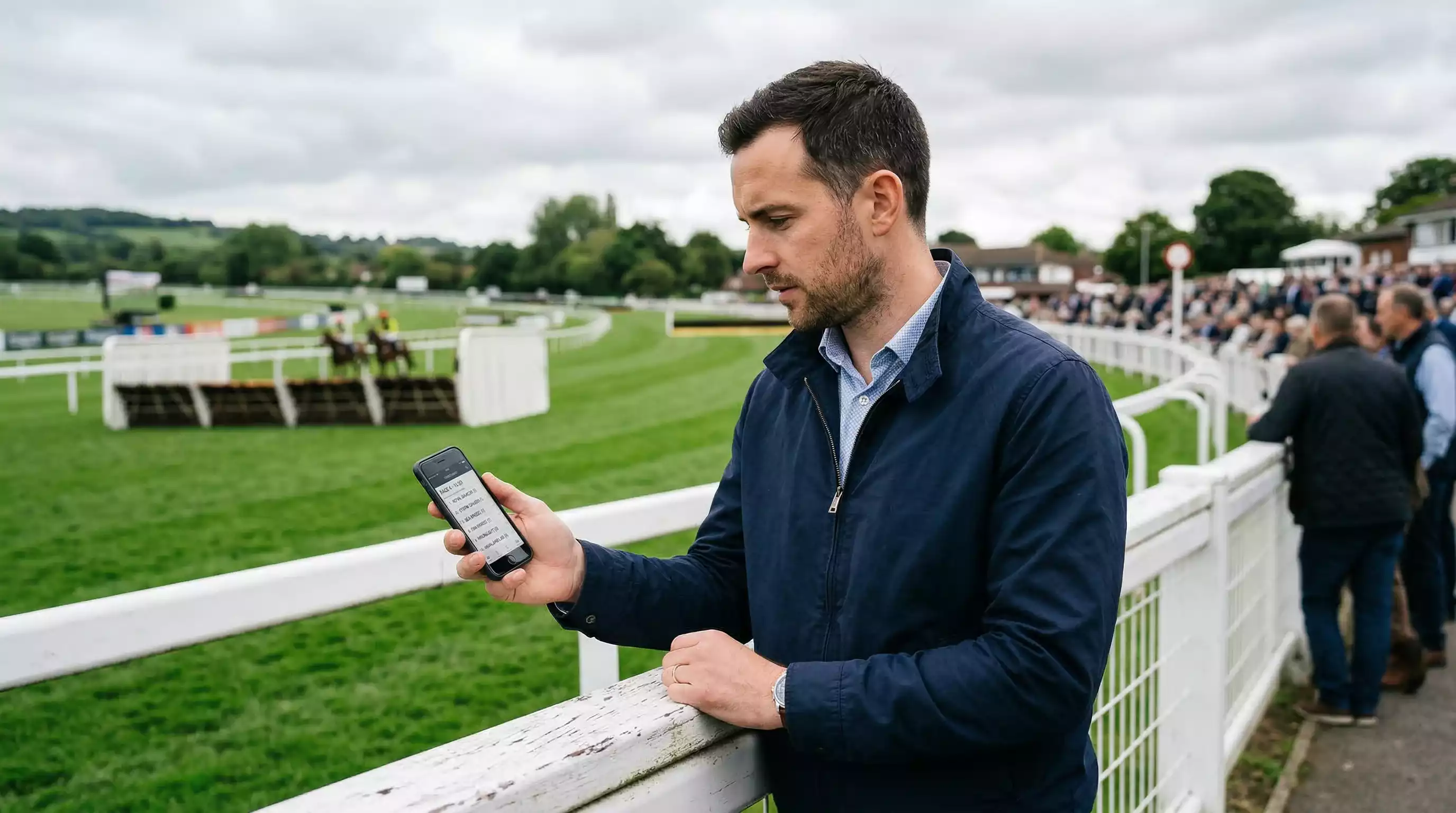
The majority of UK horse racing bets are now placed on mobile devices, and the quality gap between the best and worst racing apps is significant. The criteria that matter most are: number of taps from app launch to a placed bet on the next race, racecard integration within the betting flow, streaming reliability, and how well the app handles multi-meeting days when you need to switch between cards quickly.
The strongest mobile-first operators invest heavily in interface design and streaming integration. Some offer direct integration with dedicated racing television channels within the app, allowing you to watch a race and bet on it in the same interface without tab-switching or second-screen juggling. If you are already a subscriber to one of these channels, the seamless experience of watching and betting in one place is a genuine advantage on race day.
Accumulator tools are another differentiator. The best implementations offer a visual builder that makes constructing multiples across different meetings intuitive rather than cumbersome. “Request a Bet” features, which allow you to propose custom markets, extend to racing specials around big festival meetings on some platforms.
The trade-off with mobile-first operators is that they sometimes sacrifice depth for simplicity. The range of ante-post markets and international racing options may be smaller than at operators that prioritise market breadth over interface polish. If your needs are straightforward — UK and Irish racing, mainly day-of-race bets, with streaming on your phone — a mobile-first operator may suit you perfectly. If you trade ante-post markets or follow international racing closely, check whether the app’s coverage matches your requirements before committing.
Mobile-first punters should test apps before depositing. Count the taps to place a bet, check streaming quality, and verify that the racecards and market depth meet your needs. Interface quality varies enormously between operators.
Best Odds Guaranteed: Myth vs Reality
Best Odds Guaranteed is the most universally advertised feature across UK horse racing bookmakers, and in principle it is a genuine benefit. Take an early price on a horse, and if the starting price is higher, the bookmaker pays you at the better number. It functions as free insurance against price drift — and on volatile market days, it can turn a decent winner into a substantially better payout.
The myth is that BOG is universal and unconditional. It is neither. Every operator attaches conditions that reduce the feature’s value in specific scenarios, and those conditions fall into three categories: payout caps, timing limitations, and race-type exclusions.
Caps and Timing
Some bookmakers cap the maximum BOG enhancement per bet. If a 20/1 shot drifts to 33/1, a payout cap might mean you do not receive the full SP payout — the bookmaker will only honour the better price up to a stated limit. These caps are rarely prominent in promotional materials and vary by race type. Nearly all operators also require your bet to be placed after a specified morning window for BOG to apply. Ante-post bets placed days or weeks before a race almost never qualify.
Race-Type Exclusions
Some bookmakers exclude all-weather fixtures, international meetings, or races below a certain grade from BOG. For a punter who bets primarily on UK and Irish turf racing on the day, these exclusions may be irrelevant. For anyone with a broader pattern — winter all-weather, French racing, evening cards — they are worth checking before you assume coverage.
What to Look For in BOG Terms
When evaluating any operator’s BOG policy, check these five variables: the geographic scope (UK only, or UK and Irish), the earliest time your bet qualifies (morning of the race is standard, but some operators specify an exact cut-off), whether a cap on the maximum BOG payout exists and how it is calculated, whether Irish racing is included or excluded, and whether all-weather fixtures qualify. The range across the market is wide — some operators cover UK and Irish racing with no published cap, while others restrict BOG to selected meetings and impose per-race limits. These details are usually buried in the terms and conditions rather than displayed on the promotions page.
When BOG Genuinely Delivers Value
BOG is most valuable on days with volatile markets — big-field handicaps and festival races where late money causes significant price movements. On a quiet Tuesday card with small fields and stable markets, the starting price rarely moves enough for BOG to make a material difference. The smart approach is to use BOG as a tiebreaker: if two bookmakers offer the same early price on your selection, choose the one with better BOG terms, because the potential upside costs you nothing.
Context matters here. A bookmaker offering BOG but running a 128% book on a given race is not necessarily giving you better value than one running a 115% book without it. The embedded margin on every bet is the larger cost; BOG occasionally offsets a fraction of it. BOG is free insurance — but read the policy. The overround still matters more.
Live Streaming: What You Actually Get
Almost every major UK bookmaker advertises “free live streaming” of horse racing, and technically this is accurate — you do not pay a subscription fee. But “free” comes with conditions worth understanding before you rely on a bookmaker’s stream as your primary way to watch.
Funded Accounts and Access Rules
The standard requirement is a funded account — a positive balance, or a bet placed on the relevant meeting, to unlock the stream. The exact conditions vary: some operators require a positive balance or a bet within the last 24 hours, others ask for a minimum £1 balance, and others still want a funded account plus a minimum bet on the meeting itself. These distinctions matter if you open an account primarily for streaming — you may need to maintain a small balance or place a token bet to keep access open. Check the specific terms before relying on any bookmaker’s stream as your primary way to watch.
Coverage: SIS, RMG, and the Gaps
Bookmaker streams are licensed through two primary providers — SIS (Satellite Information Services) and RMG (Racecourse Media Group). Between them, these feeds cover the majority of UK and Irish fixtures. The quality is functional rather than broadcast-grade: adequate for following your selection, but closer to a utilitarian feed than an ITV Racing broadcast. For marquee events — Cheltenham, Royal Ascot, the Grand National — ITV Racing remains the superior free-to-air option. Some operators integrate dedicated racing television channels directly into their apps, giving subscribers a smoother in-app viewing experience, though these integrations do not necessarily cover every meeting that SIS or RMG carry.
Attendance Tells Its Own Story
The demand for streaming exists alongside a resurgence in live attendance. British racecourses welcomed 5.031 million visitors in 2025 — the first time the figure exceeded five million since 2019, a 4.8% increase on the previous year. Streaming and attendance serve different purposes: mid-week fixtures attract streaming viewers who cannot attend, while weekend festivals draw crowds who want the on-course atmosphere. A bookmaker’s streaming feature is a complement to the racing calendar, not a replacement for it.
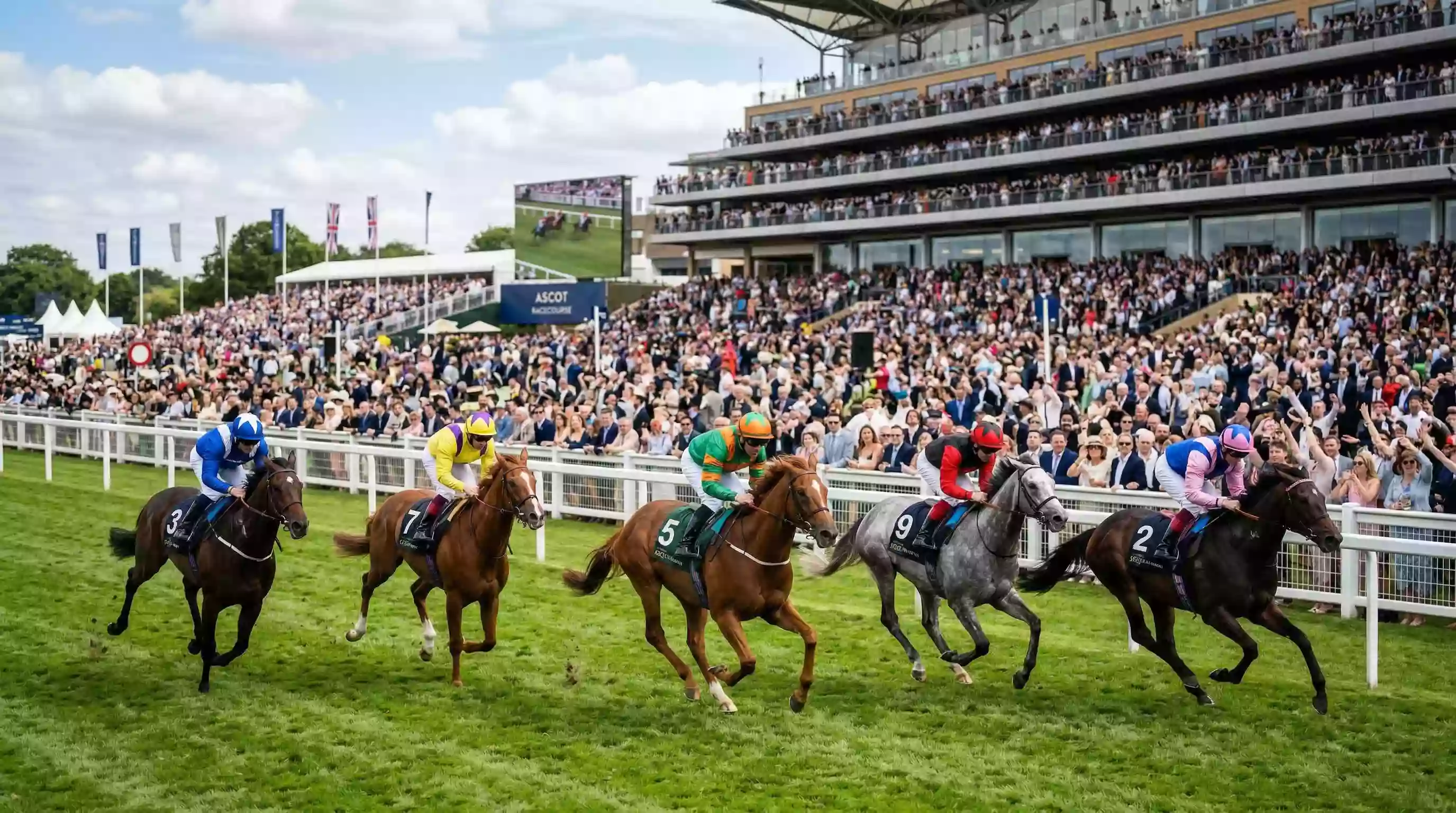
One practical note: bookmaker streams run with a slight delay — anywhere from three to ten seconds behind real-time. For standard pre-race betting, this is irrelevant. For in-play exchange trading, where prices move in seconds during a race, the delay matters. If in-play is part of your approach, supplement the bookmaker stream with a direct TV or radio commentary feed where possible.
Responsible Gambling and UKGC Safety
A bookmaker comparison that ignores the harm side of the ledger is incomplete. The same industry that provides entertainment, employment, and tax revenue also generates measurable personal cost — and understanding the data is part of making informed decisions about where and how you bet. The Gambling Survey for Great Britain 2024 found that 48% of UK adults participated in some form of gambling within the previous four weeks — 28% excluding the National Lottery. Gambling is a mainstream activity in Britain, and that mainstream scale is precisely why the harms at the margins demand serious attention.
The Problem Gambling Picture
The Gambling Commission’s 2024 Gambling Survey for Great Britain found that 2.7% of UK adults scored 8 or above on the Problem Gambling Severity Index, the threshold for problem gambling classification. Among men, the figure was 6%. Among 18-to-24-year-olds — the most vulnerable demographic — the rate reached approximately 10%. These are not fringe statistics; they represent hundreds of thousands of people across the country.
“This year’s findings deepen our understanding of consequences from gambling and provide crucial insight into risk profiles among those who gamble most frequently. We strongly encourage operators to use this evidence to consider the risks within their own customer bases.” — Andrew Rhodes, CEO, Gambling Commission
The broader participation picture from the same survey showed that 10.3% of UK adults had placed bets on sports or horse racing online in the previous four weeks, with a pronounced gender split of 15.8% among men and 5.1% among women.
The Unlicensed Market: A Growing Risk
One of the less discussed dangers in UK racing betting is the growth of unlicensed operators. An International Federation of Horseracing Authorities report found that unique visitors to 22 unlicensed betting sites grew by 522% between August 2021 and September 2024, while traffic to licensed sites grew by only 49% over the same period. In the first nine months of 2024 alone, an estimated 600,000 unique UK visitors accessed unlicensed platforms.
“The Grand National is one of the precious few sporting events in this country with the ability to unite the entire nation around a single spectacle. It is the nation’s punt, and it is being subverted by illegal operators.” — Grainne Hurst, CEO, Betting and Gaming Council
The BGC estimated that around £9.4 million in bets on the 2025 Grand National — roughly 3.8% of the £250 million total wagered — went through unlicensed operators. At a broader level, the BGC’s research suggests that 1.5 million UK adults bet on the black market annually, wagering an estimated £4.3 billion. On these sites, there are no deposit limits, no self-exclusion registers, no dispute resolution, and no contribution to UK racing through the betting levy.

Practical Tools for Self-Control
Every UKGC-licensed bookmaker must offer deposit limits, loss limits, session time reminders, cooling-off periods, and access to self-exclusion via GamStop. These are licence conditions, not optional extras. Setting a weekly deposit limit when you open an account — not after a losing run — is the most effective single step a recreational punter can take. The Gambling Commission’s register at gamblingcommission.gov.uk allows you to verify any operator’s licence status in seconds.
Tax Reform and What It Means for 2026
From 1 April 2026, the UK government is raising Remote Gaming Duty from 21% to 40%. From 1 April 2027, a new 25% rate on remote sports betting takes effect — though bets on UK horse racing are exempted at a rate of 15%, according to the HM Treasury policy paper on gambling duty changes. That exemption sounds protective, but the broader tax increase on non-racing products will squeeze operator margins across the board, potentially affecting promotional generosity and odds quality. Affordability checks, introduced under the Gambling Commission’s strengthened framework, add another layer of regulatory pressure. While they have contributed to declining betting turnover, their purpose is to prevent operators from profiting from customers spending beyond their means.
Responsible gambling is not a disclaimer. It is a practical framework: use licensed operators, set deposit limits from day one, and understand that the PGSI data represents real people. The tools exist — the question is whether you engage with them before you need them.
Frequently Asked Questions
How do I find the bookmaker with the lowest margin on horse racing?
The most reliable method is to compare overrounds across the full field on a representative sample of meetings, rather than cherry-picking individual prices. The tightest fixed-odds operators in the UK market typically run overrounds in the 112–120% range on standard meetings. However, betting exchanges operate at a fundamentally different level, with typical overrounds of just 102–105% — though you pay commission on net winnings rather than an embedded margin. For fixed-odds betting, look for operators with consistently tight books across both Flat and National Hunt. For the absolute lowest cost per bet, the exchange model wins — provided there is sufficient liquidity on your selection, which is generally reliable on UK and Irish racing but can thin out on smaller all-weather fixtures.
Is Best Odds Guaranteed genuinely worth it, or is it a marketing gimmick?
Best Odds Guaranteed is a real benefit, but its value depends on context. BOG pays you at the starting price if it drifts higher than the price you took — effectively insuring you against missing a price move. The value is greatest when you bet early on volatile markets such as big-field handicaps and competitive festival races. On short-priced favourites with stable markets, the SP rarely drifts materially above the early price, so BOG adds little. The crucial variables are the terms: some bookmakers apply BOG to all UK and Irish racing with no published cap, while others restrict it to selected meetings or impose payout limits. A bookmaker with generous BOG but a wider overround may still deliver less total value than one with tighter margins and modest BOG terms. Treat it as a useful feature within a wider pricing strategy, not a standalone reason to choose a bookmaker.
How do I check whether a horse racing betting site is safe and properly licensed?
Every bookmaker legally operating in the UK must hold a licence from the Gambling Commission. You can verify any operator’s licence status on the Commission’s public register at gamblingcommission.gov.uk by searching for the company name or licence number. Licensed bookmakers are required to segregate customer funds, offer self-exclusion tools, participate in the GamStop scheme, and follow strict advertising codes. The importance of this check is not theoretical: the International Federation of Horseracing Authorities reported a 522% increase in visits to unlicensed platforms between 2021 and 2024, and industry estimates suggest that 1.5 million UK adults bet annually on the black market — wagering approximately £4.3 billion with no player protection whatsoever. If a site does not display a UKGC licence number that verifies on the Commission’s register, do not deposit funds, regardless of how competitive the odds appear.
